Hannah Land celebrates Sacred Harp’s collaborative community, and how so many people worked together across so many fields to pour their diligence, hard work, reverence and love into the 2025 edition, birthing a book that carries forward our tradition.
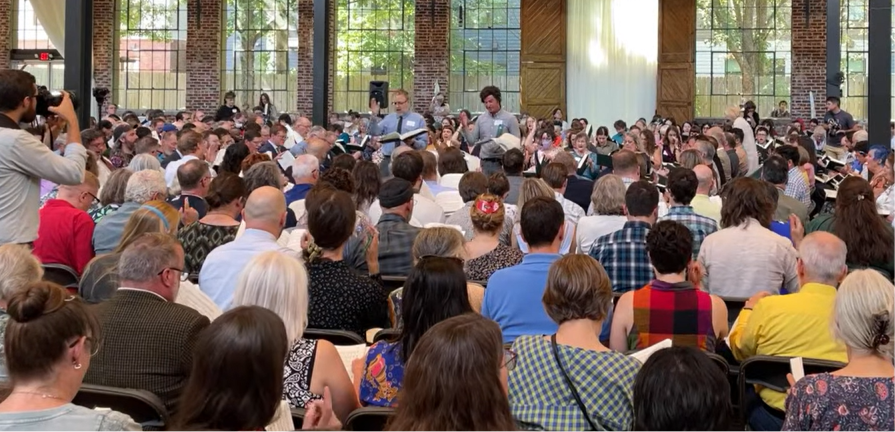
The very nature of Sacred Harp singing forces us to support each other. To create harmony, you need at least one other voice. Whether it’s a small local singing or a huge convention, we rely on others to help the singing along.
In an essay for the 2025 edition of The Sacred Harp, published a few months after he died, Buell Cobb wrote: “Sacred Harp may be of dispersed harmony, but the tradition itself is a great unifier, a bringing together of people of sometimes widely different demographics, believers and non-believers alike, and of varied singing abilities… It is ‘the people’ singing.”
Another singer, David Brodeur, emphasises the common good in his online essay on inclusiveness: “I ask myself over and over, ‘What serves the class, rather than just my own preferences and idiosyncrasies?’”
I’d like to explore this in the context of our singing and the process which birthed the 2025 edition.
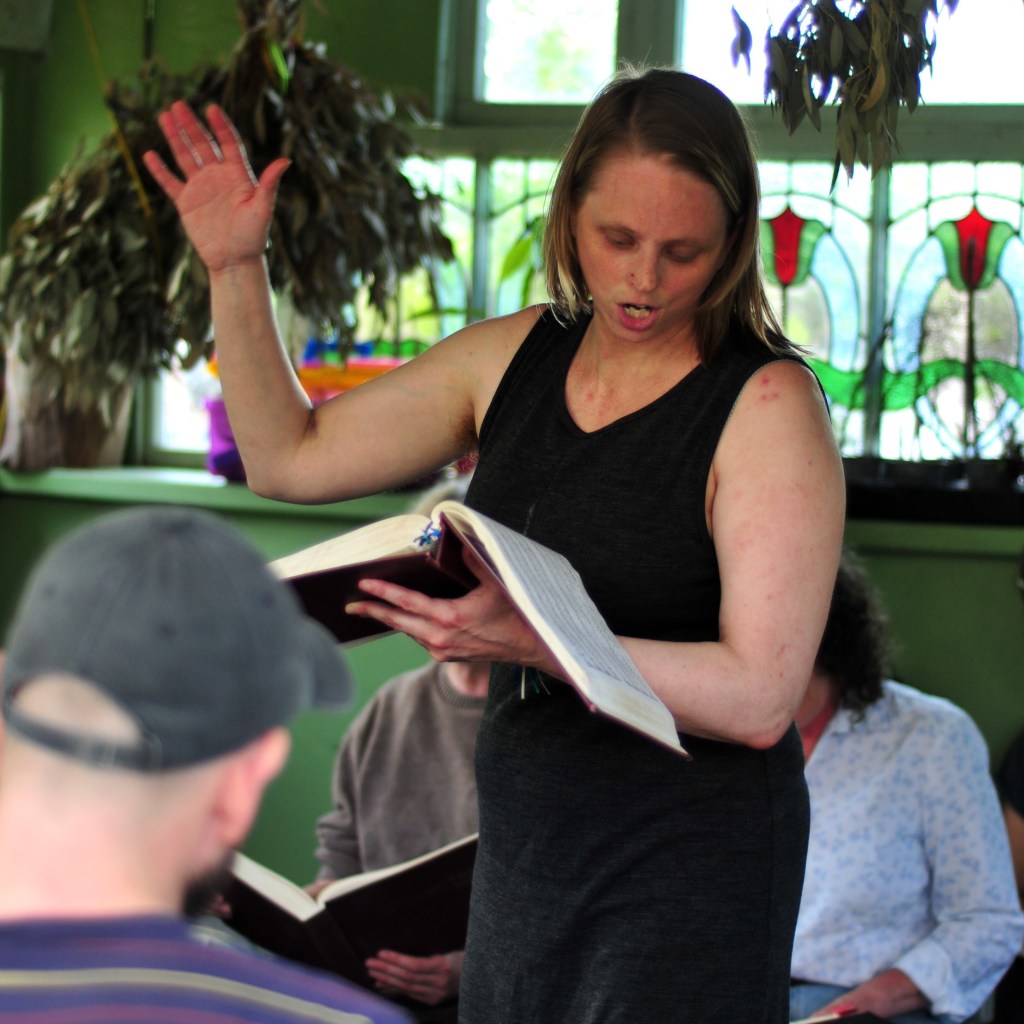
During singings, there are informal ways we support each other. Experienced singers move between parts, ensuring they are adequately covered, and that newcomers have someone to follow. Jo Kay recalls a visitor keeping her company in the altos all evening at a pub singing – not their usual part, but Jo was on her own. Singers move to fill gaps in the front row. People help to set up and clear up. They step in at the last minute to lead prayers, key, minute, make drinks, arrange. Chris Noren once found himself chairing the Florida convention when chair-elect Benjamin Smith suddenly passed away.
Singers travel, sometimes thousands of miles, and groups often offer special sessions for visitors. People open their homes to put folks up, and host singings in their lounges. Singers car share, and advise on discount travel. It’s a wonderful community of collaborators.
But the new book led me to think about the wider collaboration Sacred Harp requires.
I was in Atlanta when the new edition launched in September 2025. Excitement had been building throughout the summer with the slow release of news about old songs removed, new songs and their composers, and a brand new font, designed to make songs easier to read.
The Friday opened with a Symposium – talks about the revision process – and was also the day we got our new books.
I opened mine and looked at the acknowledgements page.
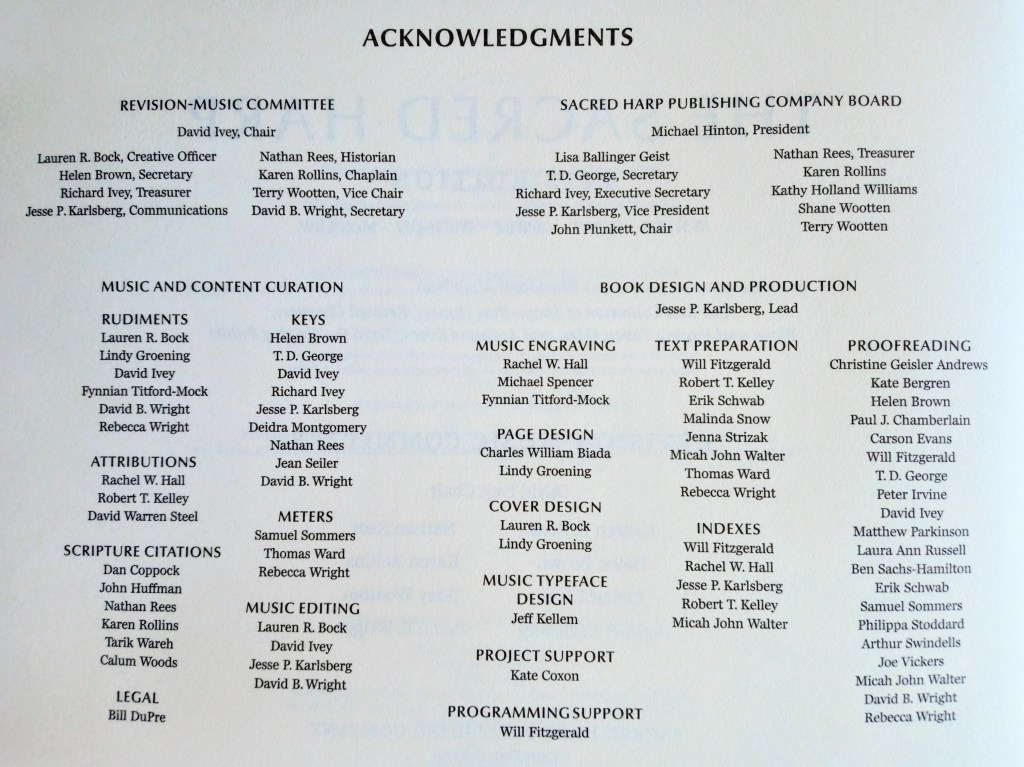
These are people I know and love; I’ve sung with many of them. I also know a large percentage of the new composers. Many folks on this page put in thousands of hours. Typesetting, proof-reading, copy-editing, listening to songs over and over again, book and cover design. Teams brought their skills to different tasks, working across time zones.
Each did their best to provide a wonderful book that thousands of singers around the world now enjoy. Each gave of themselves on top of holding down jobs, families, sickness, global pandemics, deaths and normal life.
I heard new composers being interviewed. Some (including committee members) had their songs altered by the revision committee – changes to text, phrasing, notation, and harmony structure. Friends have described some back and forth, some give and take, to ensure songs had that “Sacred Harp feel” and were as easy to sing as possible. A couple said the changes improved bits of their songs they weren’t quite happy with!
Some songs are attributed to more than one composer. I heard that Matt Hinton sent some tenor lines out into the ether asking for help with the harmonies. Mark Godfrey responded, and the result is the beautiful 531 Clayton.
Judging by the singing at the launches, and the number of new songs in regular use since September, the committee’s work succeeded. People say the new entries feel like they’ve been sung for ever. At a recent concert in Manchester, Brown Wimpenny sang Clayton and asked the audience to guess how old it was. The general consensus was hundreds of years – they were surprised to learn it was composed in 2023.
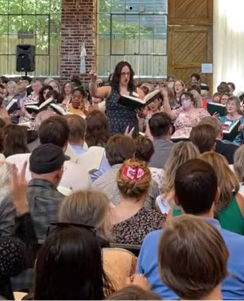
I’ve asked composers how they’d feel hearing their songs led or sung differently to how they’d imagined them. A song can sound very different depending on the class, the pitch, the pace, the choice of verses, the time of day – even how we’re feeling. Many times I’ve been suddenly moved by words in a song, or a particular moment has been very powerful for a host of reasons. Becky Wright said her song, 223 Balm in Gilead, was a gift to the community, to sing as they see fit. The composers are collaborating with the singers.
Committee chair David Ivey explained how he’d found the works of John Hocutt – songs we know and love, such as 480 Redemption – almost unrecognisable in their original form. Songs change between editions, even reprints of the same edition. All to produce a book that will stand the test of being sung for the next 30 years.
I have no doubt of the diligence, hard work, reverence and love poured into this book and our tradition, which now spans the world in ways never imagined when the 1991 edition was launched.
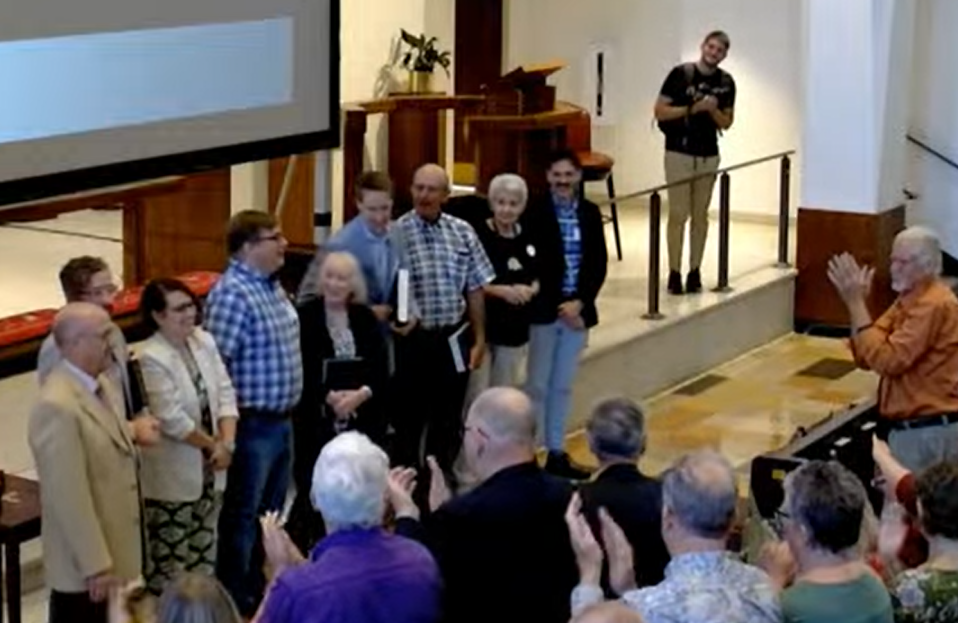
Members of the revision committee reflected our community’s diversity, plus their own skills and experience. Some have made it their life’s work to research, teach and learn from the stalwarts of our tradition – seeking old paths for our times. I have no doubt the process was fair to everyone submitting. Each song was chosen for its own merit, not the personal leanings of any committee member. We heard there was full agreement on the final selection.
There were always going to be people disappointed their songs didn’t make it. Perhaps there are new songs you don’t like or others you miss – I was sad to see Dura scrapped. Yet I’ve not been disappointed with any of the new songs. A few needed a while to bed in and grow on me. Others are prayers for our time.
What I’m most struck by is the collaborative efforts of our community, the talents and skills of our singers, the composers who let their songs be embellished.
My thanks go to every single person involved. We should celebrate their efforts by spreading this music, which has brought new energy to our singings. We, the people, are bringing the book to life.
Hannah Land is a life-long Sacred Harp singer. Now based in Nottingham, she helped establish singing in Greater Manchester and continues to support our community.


Leave a comment