Jan Geerts describes his journey into Sacred Harp, which has taken him around Europe, travelling from bafflement through determination to joy in the music he sings, the friends he has made and the life skills he has learned.
Edinburgh, April 2013
When I first heard about Sacred Harp and Shapenote singing, I was told it had no director, no tempo, no pitch.
“That couldn’t possibly work!” I said.
Of course, it does have a “director”: we all lead in turn. And the person leading decides the tempo. Someone looks at the song and determines a suitable pitch for the music, and time of day. These are aspects that you won’t pick up at first, and it won’t matter, but they deepen your experience as you learn.
Glasgow, July 2013
At my very first singing, in Glasgow, I had my head deep inside the book. I played the piano and viola, and was trying to apply my musical knowledge, but had no clue how to sing a note in sheet music, or what the shapenotes meant. When someone sounded a key – “FA – LA – SOL” – I had no idea what that was. I’m not sure I even heard it, trying to work out what note I was supposed to sing. The tenors started on a SOL, a G if you like, but I didn’t know a SOL does not equal a G. I’d spend the whole song figuring out what the other guys were doing.
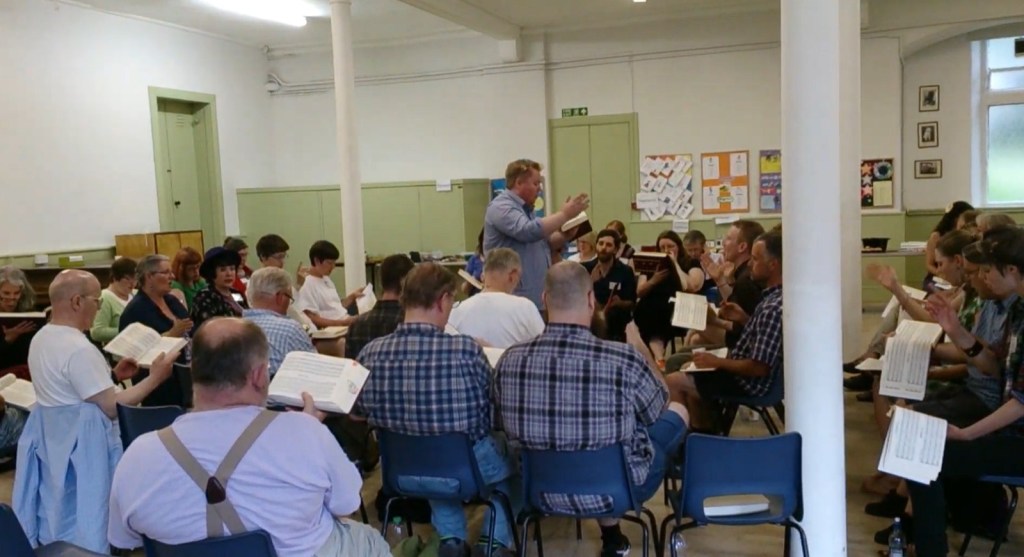
I took a video of 49b Mear, a song that would become my favourite for a long time, but I didn’t know that. I just thought “I need to capture this, because I’ll never experience it again!”
At the end, someone said: “I can really feel the love in the room.” Internally, I ridiculed this. A few years later, I understood.
Six months later, I came back. As I exited Glasgow Central station, snow was falling, a moment of magic. However, at the singing, I still didn’t know how to sing, I didn’t know any of the people, I didn’t know why I was there. Why was I doing this?
One tenor just kept on singing. I admired that! The song sounded out of tune, but they kept going. And then, sometimes, we’d hit a beautiful chord. The one that makes you cry. And I wanted to experience that again.
If you ever see tears roll down my cheeks, it means I’m having a good time. The tears may stem from happiness or pain, but have a deep meaning regardless. One of the things about Sacred Harp singing is how it confronts life and death. Tears of joy or pain are allowed. Acknowledgement is often subtle: a hand on your shoulder, as if to say “I may not understand your pain exactly, but I’m here for you.”
Stannington, September 2014
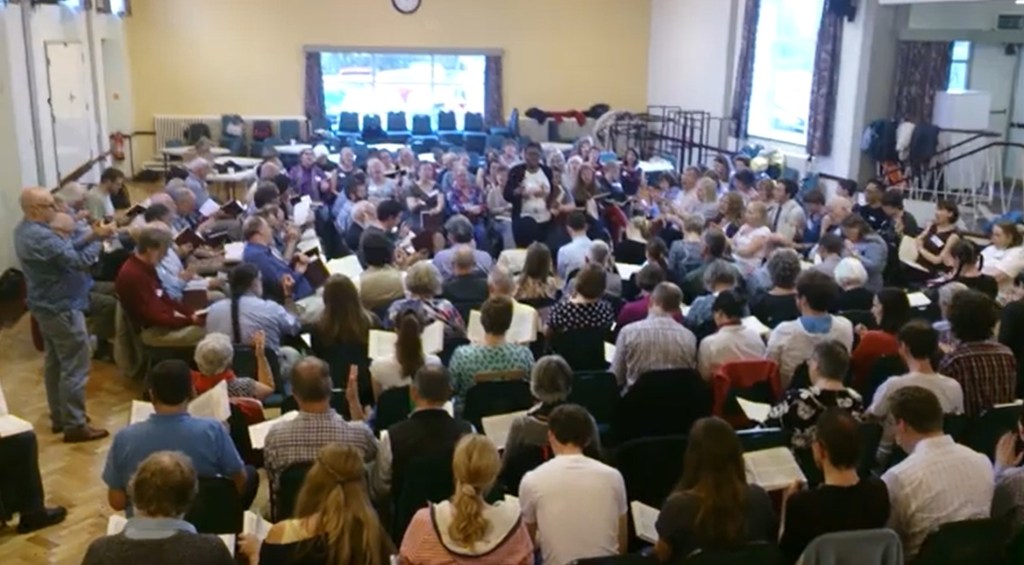
Just over a year after first encountering Sacred Harp, I ended up at the 2014 UK Convention, at Stannington in Yorkshire. “I’m not enjoying this at all,” I thought. “The songs are too fast, I can’t keep up.”
I decided that, to enjoy it, I should practise. For 30 minutes every day at work, I would retire to my car, put on a CD, the song book in my lap. I’d try to key the song, sing it by myself, then sing along with the CD. What I didn’t realise was that I was learning to key before I knew how to key. Within three months, I got the hang of it, and felt so much better that I was happy to continue.
Edinburgh, January 2015
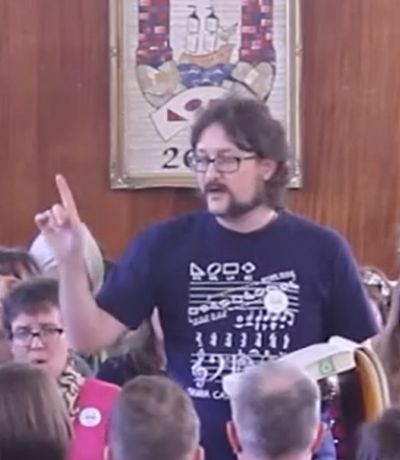
Some of our singers organised a Sacred Harp workshop, which led to the first monthly singings in Edinburgh. I was still new, but thrilled by the fact that I was singing in front of a room full of people, and not just watching an event, but being key to it, belting out 155 Northfield as if it was my first time.
Berlin, May 2017
By 2017, I was heavily involved in Sacred Harp in Scotland. I was organising events, leading songs, and had even written one of my own, badly, but the bug had bitten me.
My work took a new turn and I went to Berlin for a trade event. My hotel was in Charlottenburg, a lovely name, and the hotel clerk was pleased with my name, too: “Jan Agnes. Agnes!” Yes, hilarious, it is my godmother’s name, and I gladly live with it.
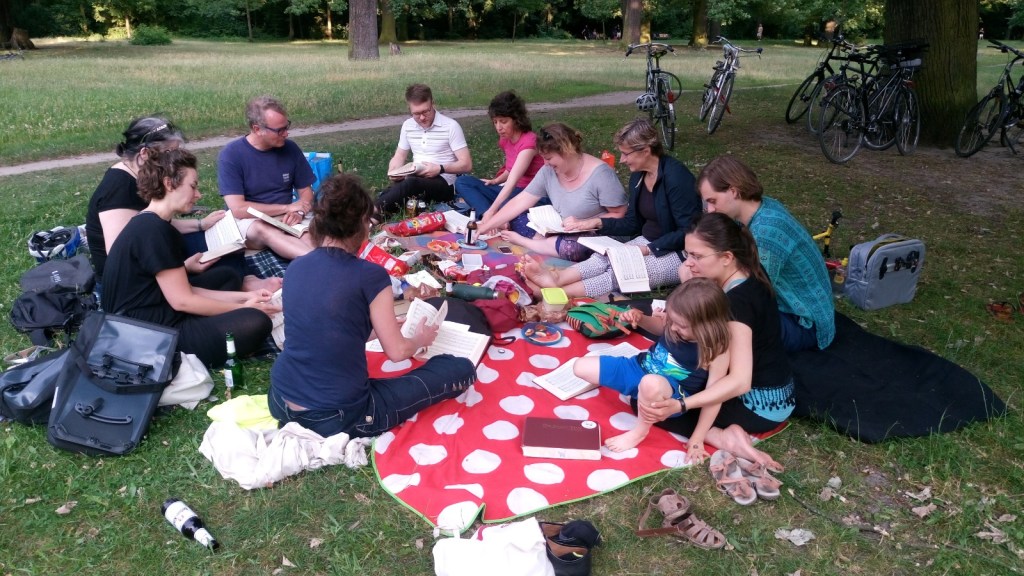
I knew there were singers in Berlin, so I reached out. To my surprise, I was invited to a singer’s home, and they fed me! Afterwards, we went to an outdoor park and sang, sitting on a blanket, sharing snacks, until the sun went down and we couldn’t see the music any more.
I was in a bad place, feet hurting because I’d worn fancy shoes that gave me blisters, unfamiliar with the trade show world, and of course unfamiliar with the Berlin singers. But Sacred Harp helped me through.
Edinburgh, May 2026
I was already married when I found Sacred Harp, and my wife saw how much it meant to me. She’s brilliant. I travel for singing, a lot, and she understands.
For me, it has been a fabulous learning experience. Singing has given me skills to interact with people, to organise events, to speak in public. I go to many places and seek out singers. I share accommodation, not just to cut costs, but to know them better. Singers come to my city and we welcome them.
I have learned so much about music! Thirty years ago, I sat at a keyboard, desperate to write music. Sacred Harp has given me a framework to write and understand it on a new level. It is pure joy to sing in harmony, to hear my songs sung, and to sing my friends’ songs! To see friends grow into leading songs, running events, writing music, taking part in whatever way works for them.
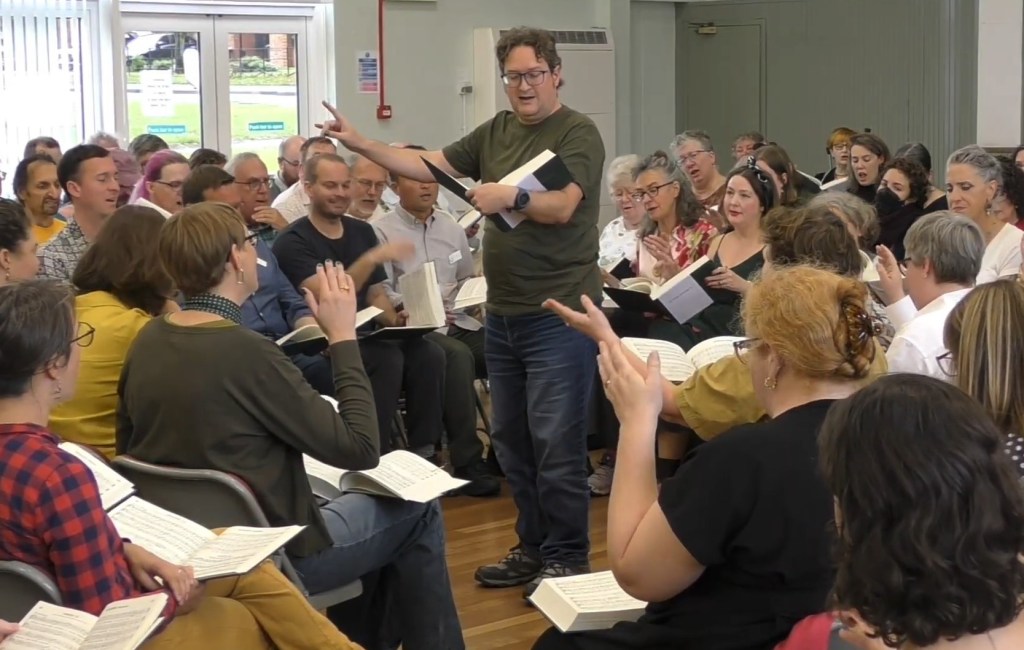
I stand in front of 200 singers and make my body convey the message “I would love to hear this song, please help me sing it.” I’m both in control, and humbled. If I hesitate, I am uplifted. If I’m confident, I am supported. At the end, I utter “thank you” as I leave the centre, often before the song has fully finished, as if I’d be overstaying my welcome.
Sing on!
- Contributor: Jan Geerts


Leave a comment