“If you can hear your neighbour singing, you’re not loud enough”, some say.
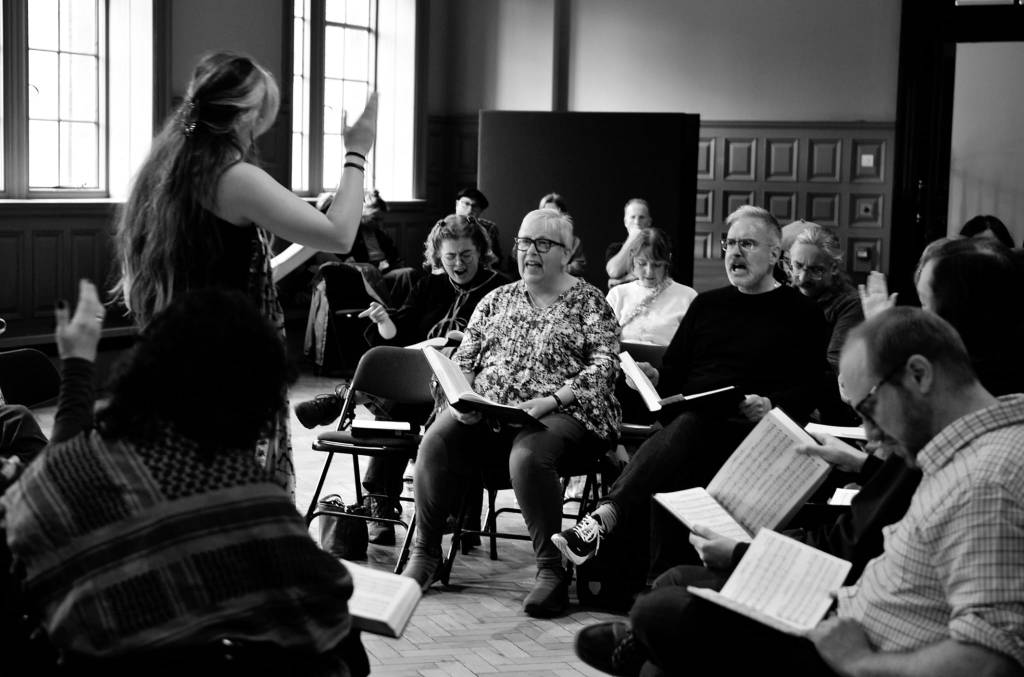
Sacred Harp – or shapenote singing in general – is sung in what some call “Full Voice”.
I tend to call it “shouty singing”, but it really ISN’T about drowning out your neighbour. There’s incredible release in permission to sing with little holding back, and it can be therapeutic, but it’s NOT advisable to dominate the Square.
There are many reasons to let go, but not overwhelm. A few:
1a. First, Do No Harm
I’ve had to swap chairs to avoid injury from a loud-singing neighbour. A fine singer and a fine human being, but I really did feel at risk of injury when my head hurt from the volume. (What we do is already too loud when “full voices” combine, but hopefully we balance risk with care.)
1b. The Long Haul
I want to sing for a long while yet, but top volume for every song/session is going to blow out the harp – uh, vocal cords. Hydration is vital, but it won’t cover all mis-steps.
Beginning singers tend to be safest as they sing more quietly and probably don’t sing every song.
2. It’s Community Singing/Learning
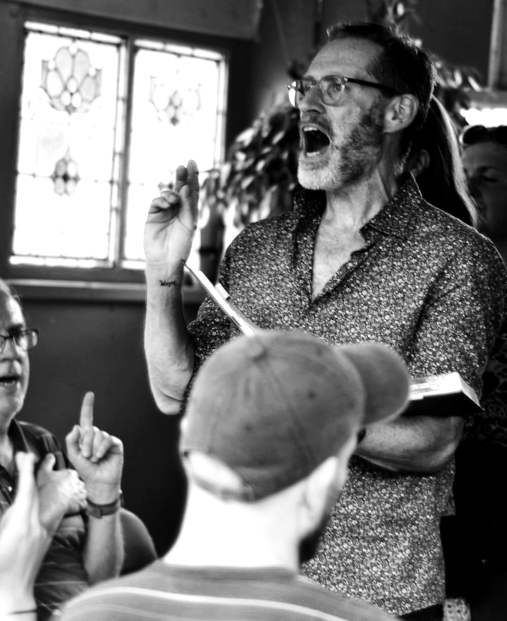
Especially for sightreading – and everyone needs to sightread from time to time – full volume builds a solitary cell, when what we need is a community of learning.
Another fringe benefit for beginners who sit out some songs – having more of a chance to listen.
In art, it is said we should return to the mindset/creativity of childhood. Perhaps in singing we should remember the value of listening and sitting out the occasional song – watch, listen and learn!
3. Respect the Rest
How sweet is that bit in David’s Lamentation (268 in Denson 1991) when everyone comes in for “O my son!” after the rest – or the bit in Rainbow (344) when the basses solo that low note ending their run?
Oh My Word!
It’s the variation – the juxtaposition of volumes – that creates the power.
The force of the full-throated runs in Novakoski (481) or Africa (178) shiver the timbers, but only if they stand proud in the song. If it’s all LOUD, they are lost.
Yes, singing loud can be fun. Letting loose can be very good for the soul, but “a change is as good as a rest”.
I’ll leave you with a snippet of H. Thomas Mitchell’s liner note on a recording of the 2000 Minnesota Sacred Harp Singing Convention (“Peace Like a River”):
For the uninitiated listener, please consider playing at least one track at maximum safe volume.
The key word here is “safe”.
Enjoy the fullness but be safe out there in the Hollow Square, folks!
- Contributor: Margaret Bradshaw

 Manchester Sacred Harp
Leave a reply to John Sprackland Cancel reply