A tradition of American folk-hymn singing, sung in unaccompanied four-part harmony. It is accessible, communal and participatory.
Sacred Harp is the social singing of sacred music. It is an international, inclusive community. It is a style of traditional shapenote singing. It is a book of songs.
Sacred Harp originated in America in the early 1800s, drawing on the hymns and folk tunes of the time.
Originally it was disseminated through singing schools, where the emphasis was on teaching singing, rather than preaching.
Now it’s sung by a notably diverse range of people. Some sing as worship. Some sing for the love of the sound. Some sing for endorphins.
Whether a local group or a gathering from far and wide, we are united by the music. Whatever our beliefs, however we identify, and wherever we call home, we can sit shoulder to shoulder with a total stranger, belt out a tune together, and instantly create a bond.
There’s no choir leader. Anyone can stand in the middle and lead. Everyone gets to choose their song. Individuals are empowered within the community, but unity is the aim. There are no solos and showboating would be frowned upon – this is not a performance. There is no audience.
And for the record, we’re not a choir. There is no set number of participants – you could literally wander into the room and you’d be welcome to sit and sing with us. Togetherness is prioritised, so all voices can find a home here.
Sacred Harp singers seek connection, not perfection. We sing for ourselves, and for each other.
“We’re all a little weird. But we all have the same book. So we’re already friends”
– from ‘Our Sacred Harp‘ on Heart and Soul – a BBC World Service radio programme, 18 April 2025

Where you’ll find us
From its roots in English church music of the early 18th century, shapenote singing evolved in New England, developed and spread by travelling singing teachers. As the population of America spread, so shapenote music thrived and expanded across the states.
Fashions changed and newer styles of singing overtook. It was the rural South which kept the tradition alive for several generations until a resurgence began, at first in the US but then spreading to the UK in the 1990s.
Now, this music is sung across the globe. If you find yourself in the West Midlands or Birmingham Alabama, Newcastle or New York, Oslo, Tokyo, Bremen, Cork… you’ll find a Sacred Harp singing.
We sing anywhere and everywhere. In Primitive Baptist churches and Tudor mansions, public halls and people’s homes, art galleries and graveyards, Quaker meeting houses, garden sheds, and pubs.

The format
If you were to follow the sound of voices floating out of the window and stumble upon a Sacred Harp singing, here’s what you’d observe:
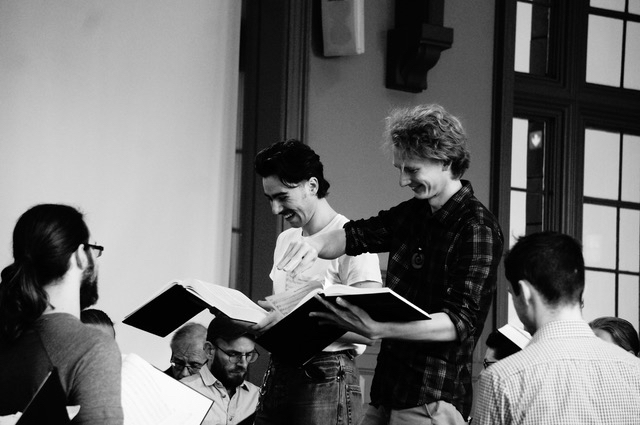
Singers sit in a hollow square, with each of the four voice parts facing into the centre. Tenors face altos, basses sit opposite trebles. We can make eye contact with each other.
Different people take turns to lead. They move to the space in the centre and call a number. We flick through our books to find the song they’ve chosen. A skilled keyer sounds the starting notes of each part. We reply by holding the note, instantly filling the space with harmony. The leader starts with a downbeat of their hand, setting pace and beating rhythm. The seated singers beat the time too – it helps to keep us together.
We sing in English, but first we ‘sing the shapes’. We sing shapenote – a unique notation system, which attributes a shape to each note to help us sight-read it on the musical scale. So we start every song by singing the through tune using names of the four shaped noteheads: fa, la, so, mi.
The book
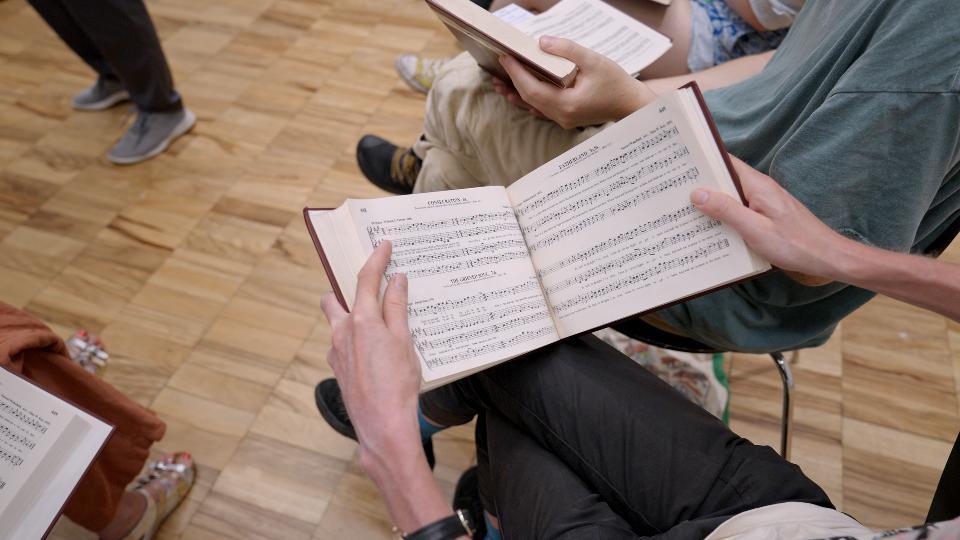
As well as describing this style of music, The Sacred Harp is also the name of the most popular of the shapenote hymnals, first published in 1844. There are numerous books. We often refer to them by their colour. The first shapenote tune book appeared in 1801. The latest one – ‘the green book’ – in 2025.
The practice of Sacred Harp is full of tradition, yet it’s not set in amber. It’s a living, ever-changing thing.
The 2025 revision of The Sacred Harp contains new songs written by singers we may know personally, right alongside those treasured by many generations of singers. Some songs predate the book itself. Old Hundred dates back to 1551.
Leaders always call a song from The Sacred Harp (or whichever shapenote tunebook the group are singing from). We don’t have an additional repertoire of other songs reworked in the style. In the green book alone, there are over 500 songs to choose from, so it’s not unusual to find ourselves singing something for the first time.
The thunderclap
Historically, Sacred Harp was sung by congregations, families, neighbouring communities. People grew up in the tradition.
Collected by ethnomusicologists, presented by folk revivalists, and picked up by colleges it began to spread its roots once more beyond its heartland of the Southern states.
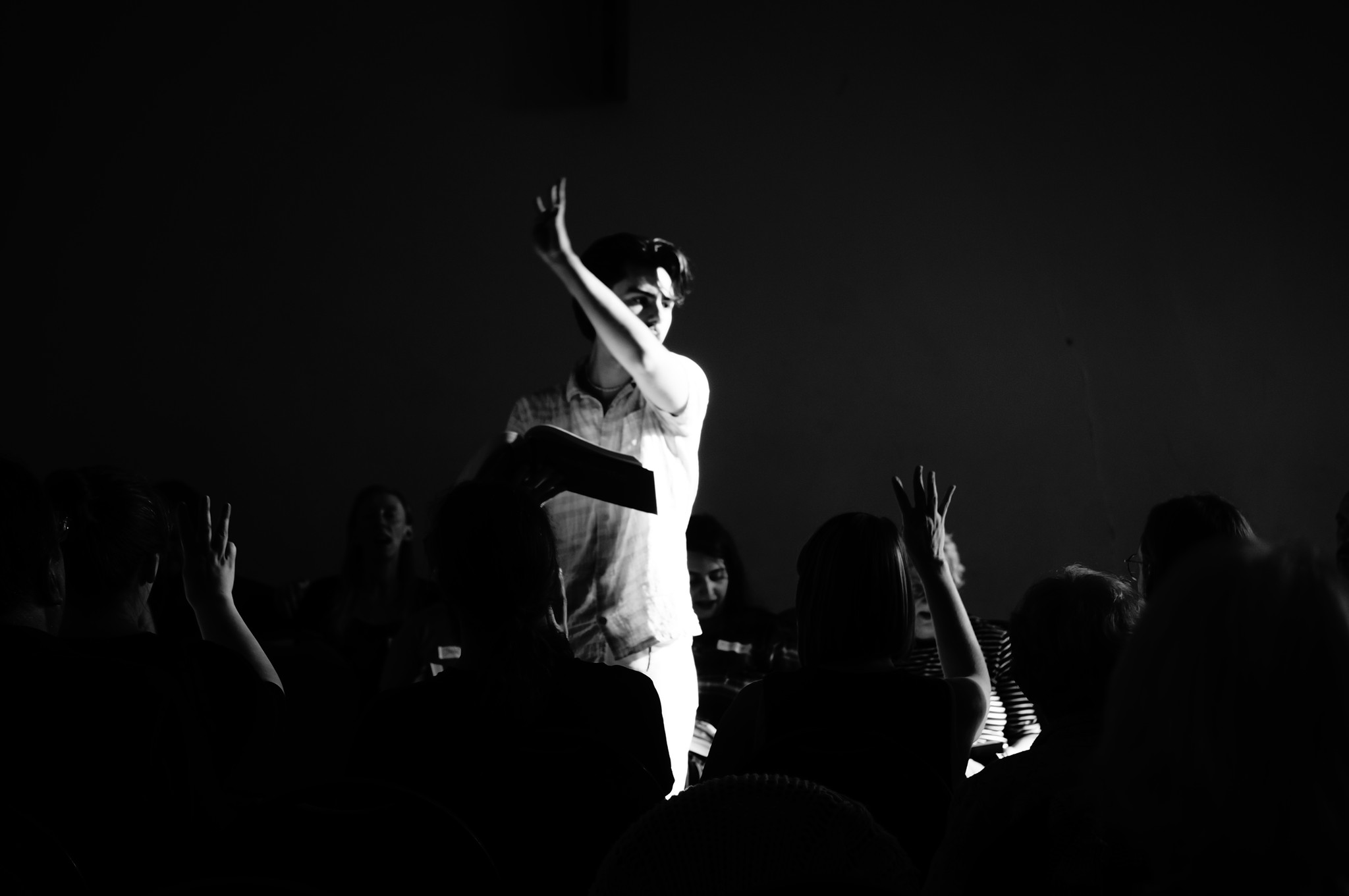
In the UK, there are already multi-generational singers, brought up hearing the music and socialising at All-Day singings. The majority of singers though, come to this not through family heritage, but through the thunderclap. That hair-raising first time of stumbling upon the sound of massed voices, singing at full volume, unpolished and profoundly human. Or the sensation of standing in the centre of the hollow square – an experience unmediated by technology – lifted and carried by a raucous harmony.
Ask any singer about how they started singing, and they’ll have an origin story that remains very alive to them.
 Manchester Sacred Harp