Harriet Monkhouse explores how the singing of Sacred Harp interacts with a religious past, and what meaning the words hold for this singer.
“What do the words of these songs mean to people?” asked a newcomer to Manchester Sacred Harp. And the answer was that it varies a great deal from one singer to another. Some find in Sacred Harp a form of worship, some are here for the music, and I imagine it’s wonderful for singers who manage both.
Traditionally, we leave religion and politics outside the room, which is probably a good practice (especially in the US). So if you’d like to keep it that way, and not to read about this singer’s relationship with religion, I won’t mind if you move on to another page!
For those still here: when I found Manchester Sacred Harp in 2023, I noted that it welcomed all voices and all faiths, or none. As I said to my friends, that’s lucky, given that I’m a not-very-musical atheist.
But, of course, it’s more complicated than that.
I first discovered Sacred Harp when a friend who likes sending me links to musical videos posted 47b Idumea. Usually, I’d just say “Thanks, that’s very nice.” But when he sent this one, I listened to it twenty times, said “I want that music at my funeral”, and started looking for a group to sing with in the meantime. I attended a few sessions before absorbing the idea that “we mostly sing about death”, but it’s interesting that my first thought was of my own funeral. (Of course, Idumea is extremely focused on death.)
One of the side-effects of getting old is that you know a lot of dead people. And it probably wasn’t a coincidence that I fell so heavily for Sacred Harp just after the year when I lost the last two members of my mother’s generation and the first two of my own.
If you’ve sung with me, you will know that I often dedicate songs, usually to people who’ve died, though I sometimes do birthdays, and I led 178t Africa for the South African men’s cricket team the day they won the World Test Championship. But singing for my dead is an important part of Sacred Harp for me; when I sing 271t Arkansas it’s for Andrew and Susan, whether I speak their names or not.
So the words of some songs, at least, have always had meaning for me. But there’s another factor in play: my religious background.
I was baptised and confirmed in the Church of England, and remained a devout Christian into my teens, when my faith gradually disappeared. This was associated with the Book of Common Prayer being replaced by booklets called Alternative Services 3 in the 1970s. I was unhappy at the loss of the cadences I loved, and felt some of the modern language was less clear than before. But it struck me that if I was so bothered by this, then I must care more about the form than the content. And eventually I found my way out of the church I’d grown up in.
But I had absorbed reams of religious text at an age when things stick. I used to read seven chapters of the Bible a night, alternating what we then called the Authorised Version (now generally known as the King James Bible) with the New English Bible. I could recite many passages of the Book of Common Prayer. And I knew Hymns Ancient & Modern not only from church but also from school; I could sing dozens of hymns from memory. I still sang hymns after I fell silent during prayers, feeling that the sung word did not commit me in the way the spoken word did.
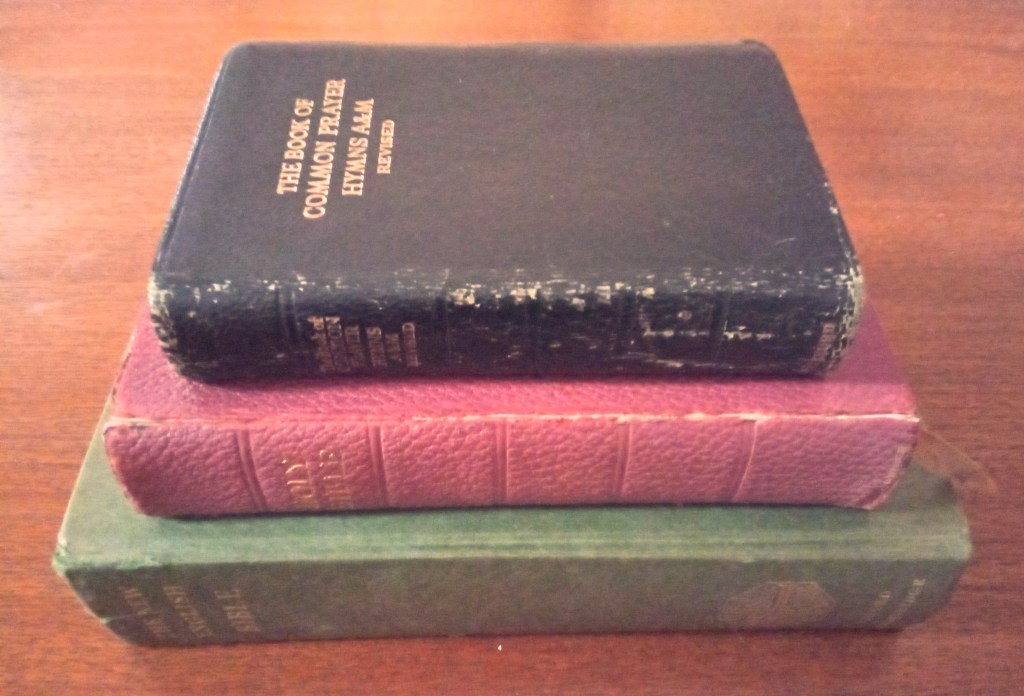
In those days I didn’t think much about the hymn-writers, but when I came to Sacred Harp there were the familiar names, such as Charles Wesley, who wrote Idumea, and of course Isaac Watts. Watts was a Congregationalist, and Wesley a Methodist, though I understand he never quite broke with the Church of England. But both were key figures in Hymns Ancient & Modern.
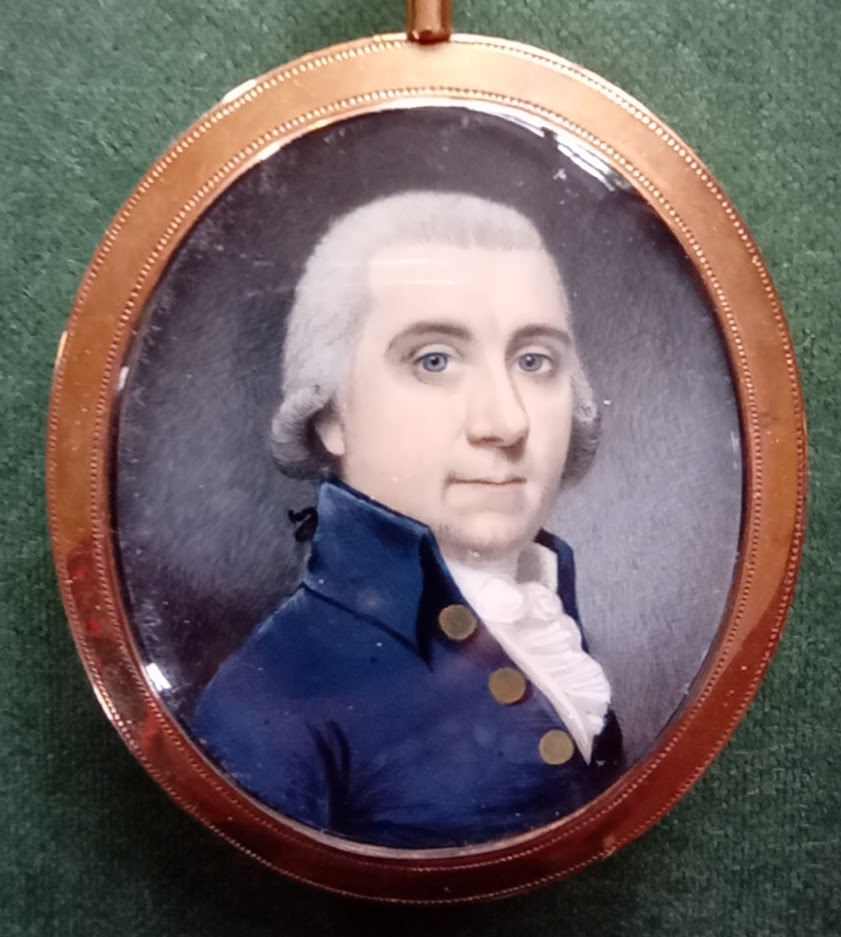
(My Monkhouse ancestors were early Methodists. This supposedly followed an incident when one of them heard John Wesley preach on a beach. He arrived planning to turn a hose on him, but was so impressed by Wesley's words that he turned the hose on hecklers in the crowd. I'm not sure how hoses operated in the 18th century, but this is the story I was told.)
I have wondered whether all this religious material stored in the back of my mind is not so different from what the first writers and singers of Sacred Harp knew. Not the same; they came from different wings of Protestantism, which is why many of them left England in the first place. I think they favoured the Geneva Bible over King James, and I presume they worshipped with something other than Common Prayer. But the hymns – they held on to Watts, Wesley and John Newton. There has always been an English dimension to Sacred Harp.
Perhaps, despite my loss of faith, my background is still a little closer to those people than is common for 21st-century Britain. I’m sometimes surprised when fellow-singers ask about a name or reference in the text that I take for granted. And, when we were singing 268 David’s Lamentation for ARK, I was inclined to rant about how “If David had apologised to his daughter, he wouldn’t have needed to apologise to his son!”
When I started to sing Sacred Harp, part of my brain said “Oh, so we’re doing all this again?” And the other part said “No, no, this is different, we’re just singing, the text is incidental.”
But it isn’t, because some of it has connected with parts of my long-ago self.
Will I ever find my faith again? It’s not impossible, but I think it very unlikely.
And yet… maybe there’s a parallel world, in which I never lost it. And maybe, when I lead a song like 413 Buffam Falls, there’s a chink in the walls between the worlds.
- Contributor: Harriet Monkhouse
 Manchester Sacred Harp
Leave a comment