Susanna Cox explains how a haunting song heard in the Whitworth Art Gallery began the quest which culminated in her returning to the gallery to sing with Manchester Sacred Harp.
One rainy weekend afternoon, my husband and I found ourselves wandering aimlessly around the Whitworth Art Gallery. I don’t normally watch the audiovisual installations, but we were drawn into the dark gallery space by the strangest of sounds. On the large screen a documentary was playing where Sufi chanting was interspersed with clips of people singing what sounded like old hymns or folk songs.
The documentary, called The Circle and the Square, was made in a mill in Lancashire. From the 1960s until it closed in 2010, Brierfield Mill brought together those of South Asian heritage and white communities as they operated the textile looms side-by-side. American artist Suzanne Lacy worked with these groups, exploring all the factors that shaped their relationships with each other. This culminated in a moving film where they were invited to sing alongside each other and listen to experiences of former mill workers.
I don’t remember anything that was said, but I do remember the sounds that reverberated around the walls of that empty mill. The hairs on my arms were standing on end and I was deeply moved. The words from one of the songs stayed with me, echoing around my head….“I am a poor, wayfaring stranger, While journ’ying through this world of woe, Yet there’s no sickness, toil nor danger, In that bright land to which I go.”
In the days that followed I felt like the words and tune were strangely familiar, but I couldn’t place them. What was this strange style of singing, where people moved their arms in time to the music and sang unaccompanied with such passion? Eventually I realised the words were familiar from an Eva Cassidy song I loved called Wayfaring Stranger, but the tune felt much older than her soulful rendition. I turned to Google to try and find out what this type of singing was called, but my searches of folk or hymn singing groups didn’t lead to anything.
I had been looking for a singing group for a while, but didn’t feel like I wanted to join a choir. Growing up in a lively Baptist church, I had really been missing singing within a congregation. My favourite times were when the band paused, allowing the voices to continue on in harmony. All the noise in my mind would be stilled in those moments of soaring sound.
One evening I was half-watching television. Suddenly my ears pricked up when I heard the style of singing from the Whitworth exhibition. “I’m going there to see my father, I’m going there no more to roam.” It was the exact same song! I found the programme was coincidently called Wayfaring Stranger with Phil Cunningham, and he was exploring the age-old musical connections between Scotland, Ulster and America. I learnt that this ancient style of singing was called Shape Note or Sacred Harp singing.
Cue more fervent Googling! I wasn’t expecting to find any groups locally, but could hardly believe it when the first thing that came up was Manchester Sacred Harp. And they were meeting the following Sunday at the WHITWORTH ART GALLERY!
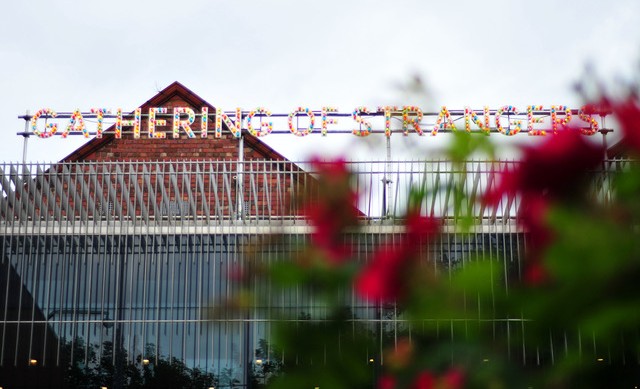
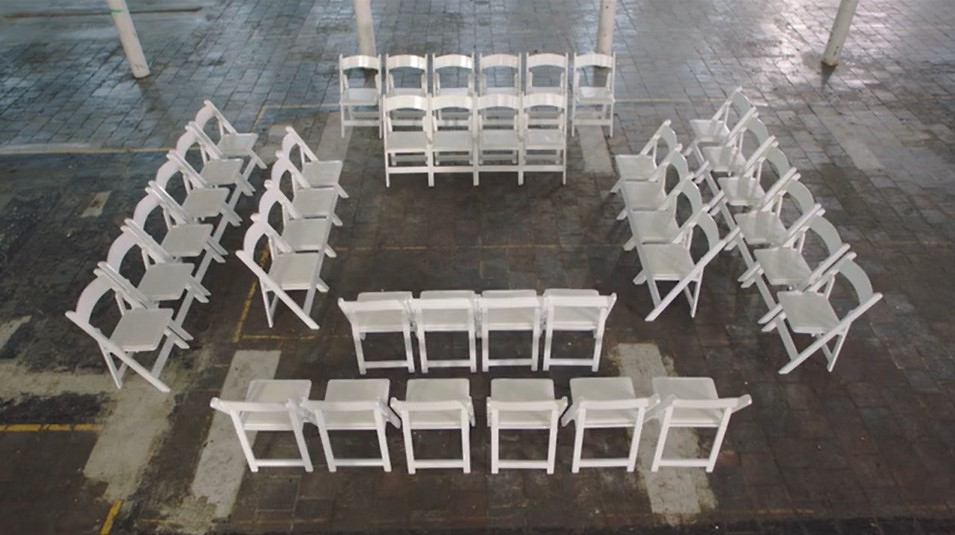
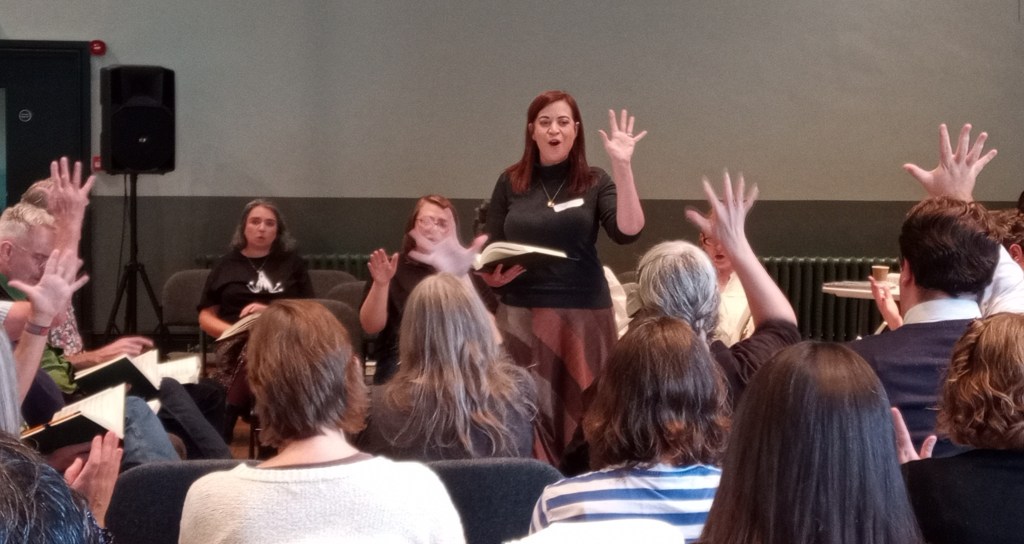
Entering the gallery the following Sunday, I was struck by the words on the top of the building, Gathering of Strangers, reminding me again of the Wayfaring Stranger song that had begun this journey. As I was gathered into the square and the opening shapes were sung, this Wayfaring Stranger felt like she had found a place to call home.
- Contributor: Susanna Cox
 Manchester Sacred Harp
Leave a comment