Vicki Elliott has composed two songs in the 2025 edition of The Sacred Harp. She tells us how she came to write them, and celebrates the contributions of women in the new book.
September 2025 saw the launch of the much-anticipated 2025 edition of The Sacred Harp, and I am quietly (Britishly) thrilled that it includes two of my compositions. There have been lots of questions over the last few weeks and months about my songs being in the new book. Does it feel weird, has it sunk in yet, are both song titles related to Bristol, will you sign my book (yes, no, yes, and if you insist).
I’ve also recently been asked how it feels to be a female composer. My first thought was, well, I don’t really know how to answer that, as I don’t have anything to compare it to. As I’ve reflected on this question, I’ve come to appreciate that my experiences of writing and sharing Sacred Harp music have been filled with support, respect, and encouragement from other composers and the wider community. Sometimes the best kind of inclusion is when you don’t even notice a difference.
How it all started
As for the songs themselves, 259 Easton was the first I wrote in the Sacred Harp style, after attending Camp Fasola (a summer camp held in Alabama) in 2015. Camp Fasola always hosts a packed agenda, with classes on rudiments, keying, leading, accenting, and composing. I found the experience of writing music and sharing first drafts with other new composers rewarding and addictive. I’d barely been home a week before the beginnings of Easton were on paper.
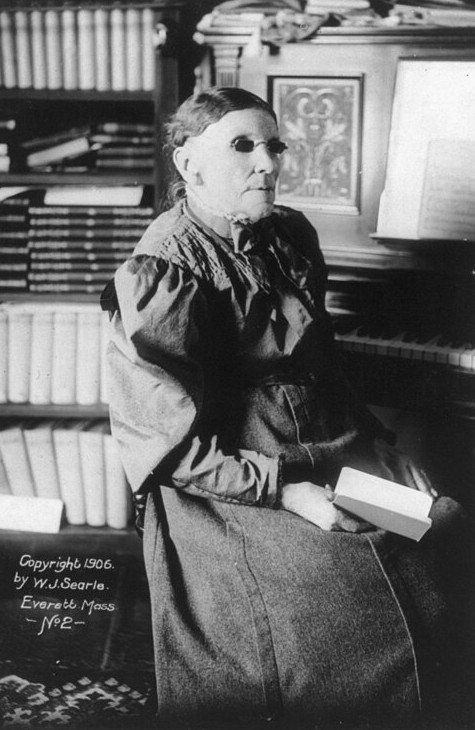
When it came to selecting a text for my first song, I wanted to use words by a woman. American poet Fanny J. Crosby (1820–1915) is believed to have written somewhere between 5,000 and 9,000 hymn texts, under her own name and numerous pseudonyms. Her very first, written at the age of eight, reflected on the loss of her eyesight at just six weeks old and became a self-claimed life motto:
O what a happy soul am I!
Although I cannot see,
I am resolved that in this world
Contented I will be.
She seems like someone who might have enjoyed Sacred Harp.
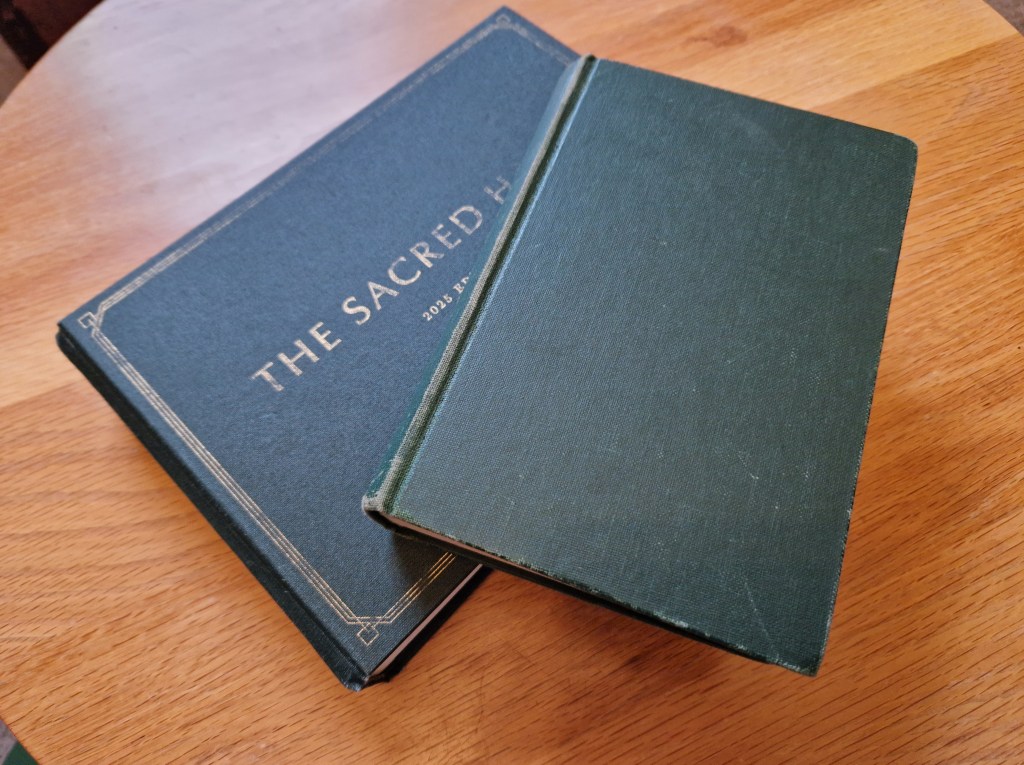
I found the text used for Easton (Crosby’s Lift up Thine Eyes, O Watchman!) in an old, battered copy of Sacred Songs & Solos, compiled by Ira D. Sankey, which I assume my Dad gave me when I mentioned looking for texts for a song. The colour of the book is almost identical to the green of our new Sacred Harps, and, ironically, the book cover title is now completely illegible, worn away with time.
The second of my songs selected for the 2025 edition, 323b Kingswood, also features lyrics by a female author, Anne Steele (1717–1778), born and buried in Broughton, in the south of England. At Camp Fasola, I joined some 7 am porch singings from the Lloyd’s Hymnal, a collection of hymn texts without music where words are often sung to whatever tune is recalled at the time.
Steele’s hymn At the Death of a Young Person was sung during one of these early-morning gatherings, and I liked it enough that I made a note next to the text in my book. It became the basis for Kingswood, though when I was looking back for this article I realised the third verse actually comes from another Steele hymn, Life is a Span, a Fleeting Hour – a decision I don’t remember making.
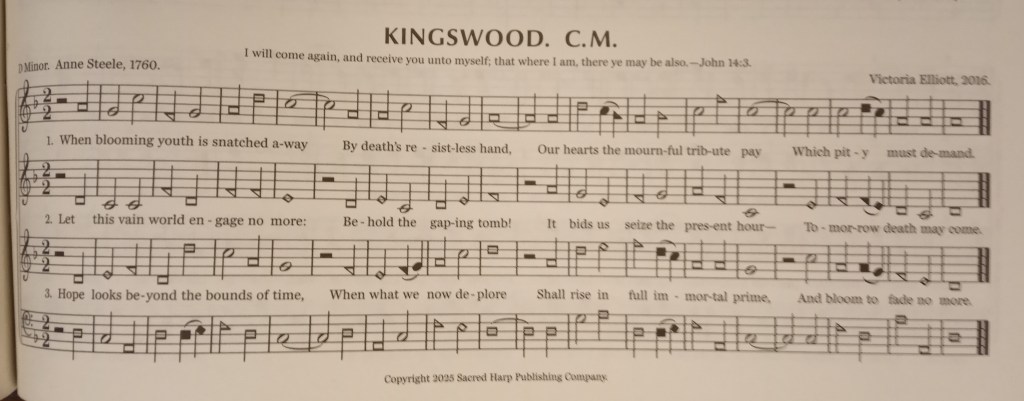
The 1991 edition of The Sacred Harp already included eight texts by Anne Steele, including some classics many singers will be familiar with: 32b Distress, 354t Lebanon, and 475 A Thankful Heart. The 2025 edition features seven more. Six of the new inclusions were written by living composers, and five of those are women.
The Row of Sharons
Throughout the revision process, the Revision-Music Committee has demonstrated great attention to detail in their decisions. There was an impressive teaser campaign in the lead-up to the launch and several sneaky nods to previous editions, plus ‘easter eggs’ hidden in the book. One surprise the committee included in the new edition was a string of songs by female composers across the six pages previously occupied by the Rose of Sharon (254-259).
The six songs were purposefully led back-to-back during the Saturday morning of the book launch at the United Convention in Atlanta, an exciting show of support and celebration for women. For me, the buzz was all the more special knowing Easton was included in this new “Row of Sharons”, following 254 Warsaw (Lauren R. Bock), 255 Mechanicville (Deidra Montgomery), 256 Northampton (Allison Blake Steel), 257 Manatawny (Rachel W. Hall), and 258 Inspiration (Jenny Solheim).
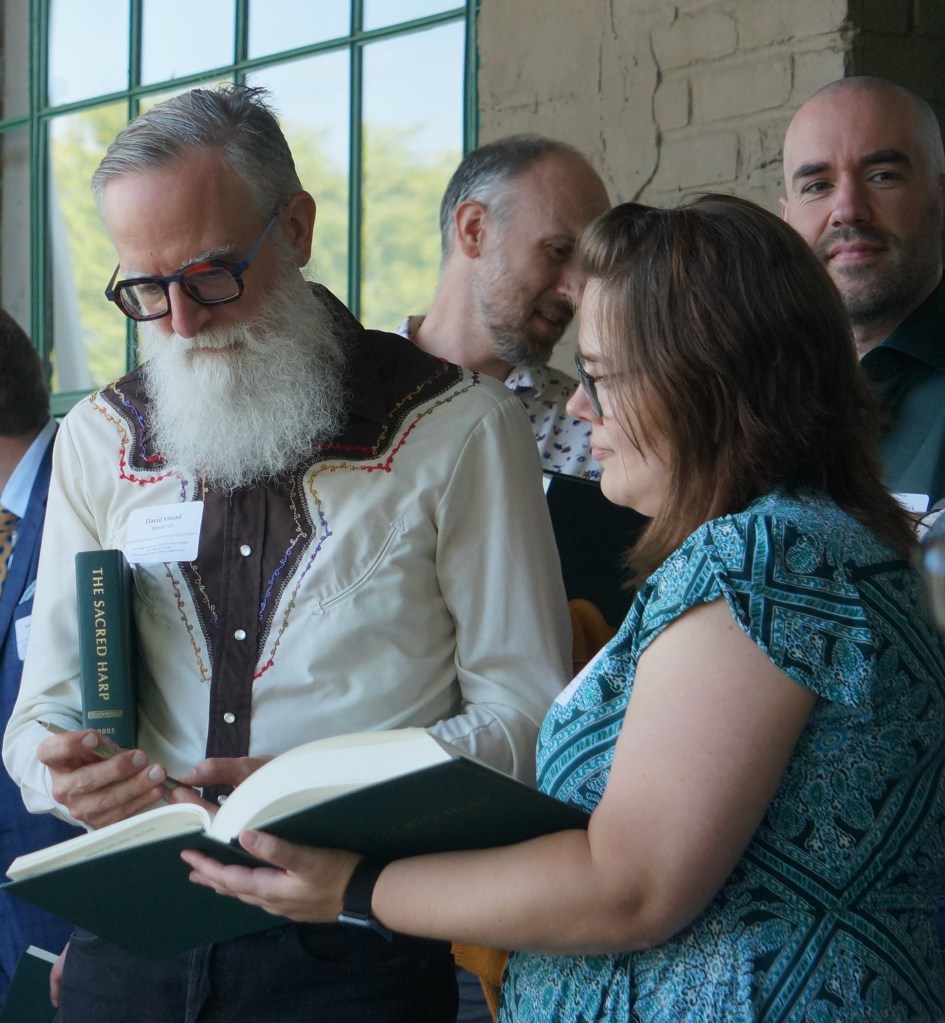
Women are not only included in The Sacred Harp: 2025 Edition, but they are championed and celebrated by those around us. I’m so pleased for the women who’ve contributed to the new edition. I’m grateful to the community that has embraced our contributions, and I look forward to seeing continued representation of all those who form part of our Sacred Harp community.
A few numbers worth noting
Just before you start flipping through the indexes for inspiration from women composers and authors, here are a few stats that show the representational progress we have made:
- The 2025 edition had three women on the Revision-Music Committee; back in 1991, there were none.
- 17 women are recognised for their contributions on the acknowledgements page of the new edition. In 1991, there were just three.
- At the last 10 UK Sacred Harp Conventions, twice as many women have filled the roles of Chair and Co-Chair as men (eight women in comparison to only four men).
- Contributor: Vicki Elliott

 Manchester Sacred Harp
Leave a comment